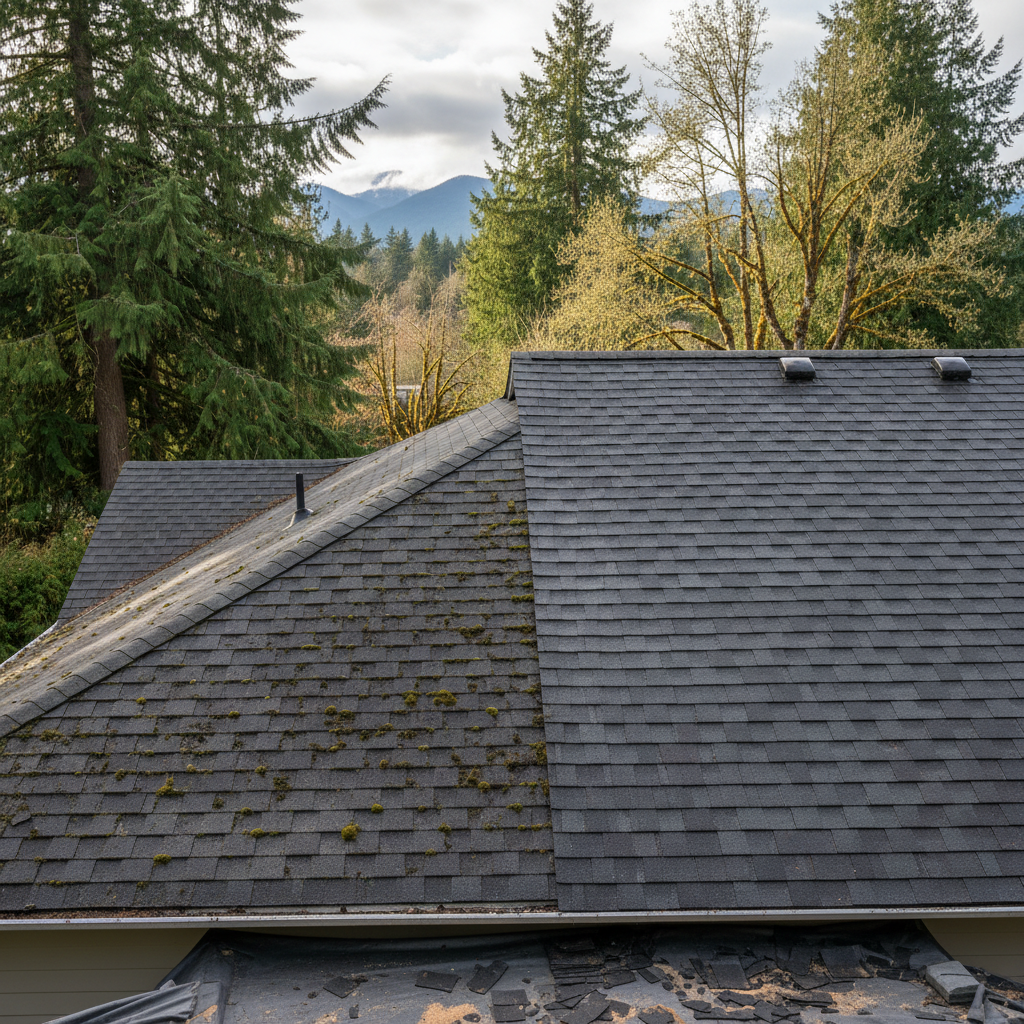
Your roof is leaking. What a pain, right? When this happens, most homeowners immediately think, "Can't we just patch it?" Sometimes, sure, you can. Other times, though, you're really just putting off the inevitable. Here in Sammamish, with our notoriously wet winters and all those older homes up on the Plateau, knowing when a patch will do the trick and when you need to replace a whole section of your roof can save you a ton of grief — and money.
Patching: The Quick Fix
So, what exactly *is* patching? It's pretty much what it sounds like. We find the exact spot where water's getting in – maybe just a few cracked shingles, a small hole, or some loose flashing – and then we repair only that little area. We'll try our best to match the shingles, seal everything up tight, and make sure it's watertight.
The Good Side of Patching:
- Cost: This is the big one, isn't it? Patching almost always costs less upfront. You're paying for less material and less labor, after all.
- Speed: A small patch job can often be done in just a few hours, sometimes even quicker. It's a fast way to stop an active leak.
- Less Disruptive: We're not tearing up half your roof. That means less mess, less noise, and less impact on your daily routine.
The Downside of Patching:
- Durability: Here's where it gets a bit tricky. A patch is only as good as the roof around it. If your shingles are old and brittle, fixing one spot might just mean another one starts leaking next month. It’s kind of like putting a band-aid on a much bigger wound.
- Appearance: Even when we do our best to match, a patch can still stand out. This is especially true on older roofs where the original shingles have faded quite a bit. It might not bother everyone, but it's something to think about.
- Limited Scope: Patching won't fix bigger, underlying issues like widespread shingle deterioration or problems with the decking underneath.
Section Replacement: The More Robust Option
Section replacement means we're taking off a larger area of your roof, not just a few shingles. We're talking about removing several rows or even an entire slope, checking the decking beneath, and then putting in new underlayment and new shingles for that whole section. This is a more involved process, no doubt, but it usually gives you a much better, longer-lasting repair.
The Good Side of Section Replacement:
- Durability: This is its main selling point. You get a fresh, uniform section of roof that's built to last. We can also deal with any rot or damage to the decking that might be hiding under those old shingles, which is super important with all the rain we get here in Sammamish.
- Appearance: While there might still be a slight difference between the new and old sections, it generally looks much cleaner and more intentional than a patchwork quilt of different-colored shingles.
- Addresses Underlying Issues: This is your chance to fix things you can't see. We often find soft spots or water damage on the plywood decking once we pull up the old shingles, which is good to catch early.
- Warranty: Often, a larger section replacement can come with a better warranty on both materials and labor than just a small patch job.
The Downside of Section Replacement:
- Cost: Naturally, it's more expensive than a patch. More materials, more labor, more to dispose of.
- Time & Disruption: It takes longer, plain and simple, and it's a bigger project. Expect more noise and debris.
Which One Should You Choose?
Here's what I recommend you think about:
- Age of Your Roof: If your roof is past 15-20 years old, especially if it's asphalt shingles, a patch might just be a temporary fix. The rest of the roof is probably nearing its end too. You might be better off saving up for a full replacement or doing a larger section.
- Extent of the Damage: Is it just one or two shingles? Or do you see widespread cracking, granule loss, or multiple leaks? A small, isolated issue is a good candidate for patching. Widespread problems call for more.
- Your Budget & Future Plans: If you're planning to sell your home in a year or two, a well-done patch might be enough to get you by. If this is your forever home, investing in a more durable section replacement makes more sense, doesn't it?
- Underlying Problems: If you suspect there's water damage to the decking or attic, you really need to open it up and take a look. A patch won't fix rotten plywood.
For most homes in Sammamish, especially those built in the 80s and 90s with their original roofs, I often lean towards section replacement if the damage is anything more than a single, easily isolated shingle. Our weather here is just too unforgiving to rely on a quick patch for long. You want something that's going to stand up to our heavy rains and the inevitable moss growth. Midway Roofing always gives you an honest assessment. We'll show you what we find and help you make the best call for your home and your budget.