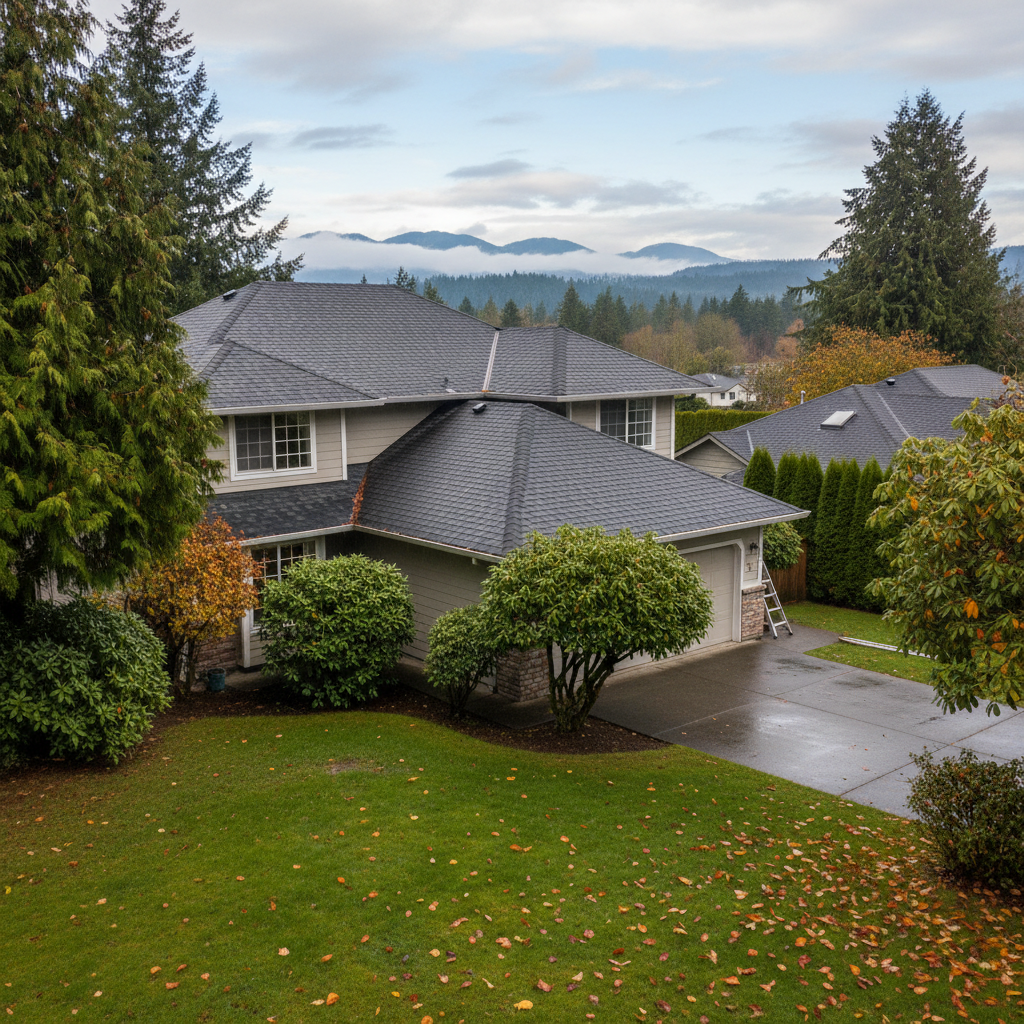
When's the best time to get work done on your asphalt shingle roof here in Sammamish? That's a question I hear a lot, and for good reason. Our Pacific Northwest climate isn't like, say, Arizona or Florida. We've got our own set of challenges, especially when it comes to keeping a roof in top shape.
Understanding Our Sammamish Climate and Your Roof
You know how it is around here. We get those long, wet, and often chilly winters. Then, usually from July through September, it's pretty dry and warm, sometimes even hot. This cycle has a big impact on your asphalt shingles. The constant wet-dry, hot-cold expansion and contraction really puts them through their paces. And let's not forget the moss and algae that just love our damp conditions, especially on those north-facing slopes or under heavy tree cover, common in neighborhoods like Montreux.
Asphalt shingles are designed to be tough, but they're not invincible. The granules on top, which protect the asphalt from UV rays and give the shingle its color, can get dislodged over time. Extreme temperature swings can make them brittle or soft. And moisture? That's the big one. It can get under loose shingles, freeze and lift them, or just sit there and encourage growth.
When to Schedule Roof Work: It's All About the Weather
So, when's the sweet spot for roof work? Generally, you want to avoid the peak of winter and the dead of summer for major installations or repairs. Here's why:
- Spring (April-June): This is often ideal. Temperatures are mild, and while we still get rain, there are plenty of dry days. Shingles stay flexible enough to be installed correctly, and sealants cure well. It's also a great time for inspections and minor repairs before the summer heat bakes everything.
- Summer (July-September): Good for quick repairs and inspections, but be careful with full installations. While it's dry, extremely hot days can make shingles too soft, causing damage during installation if workers aren't careful. Plus, walking on very hot shingles can dislodge granules. We're usually booked solid then, too, so plan ahead.
- Fall (October-November): This can be a good window, but you're racing against the rain. If you can get work done before the heavy, consistent downpours start, the mild temperatures are good for shingle adhesion. It's also a crucial time for gutter cleaning and moss treatment before winter sets in.
- Winter (December-March): This is the toughest time. Cold temperatures make shingles brittle and prone to cracking. Sealants don't cure properly. And working in the rain or on a wet, slippery roof is dangerous for our crew and not good for the quality of the work. We'll do emergency repairs, of course, but major projects? We try to avoid it unless absolutely necessary.
For something like a full roof replacement, we're usually looking to start in late spring or early summer to take advantage of those longer, drier days. For maintenance like cleaning or moss treatment, spring and fall are your best bets.
Protecting Your Investment Year-Round
You've got a significant investment in your roof. Here's how you can help protect it, no matter the season:
- Keep Gutters Clean: This is huge. Clogged gutters mean water backs up, sits on your roof edges, and can even get under your shingles or rot your fascia boards. Do this in late fall after the leaves drop and again in late spring.
- Trim Overhanging Branches: Those beautiful trees are a double-edged sword. Branches scraping your roof can damage shingles, and falling debris can cause impact damage. Plus, they keep your roof shaded and damp, encouraging moss.
- Watch for Moss and Algae: If you see it starting, address it. Don't let it take over. Moss holds moisture against your shingles and can lift them. There are treatments that can safely kill it without damaging your roof.
- Regular Inspections: I can't stress this enough. A professional inspection once a year, ideally in spring, can catch small issues before they become big, expensive problems. We'll check for loose or missing shingles, damaged flashing, granule loss, and anything else that looks off. This is where Midway Roofing really shines – we're thorough.
- Address Repairs Promptly: Don't put off a small leak or a few missing shingles. Water intrusion can quickly lead to rot, mold, and much more extensive damage inside your home.
Ultimately, staying proactive is your best defense against our Sammamish weather. A little attention at the right time can save you a lot of headache and money down the road. If you're ever unsure, just give us a call. We're happy to take a look.